
Musculoskeletal decline is a leading contributor to chronic pain, loss of independence, and reduced quality of life – placing sustained and growing pressure on healthcare systems worldwide.
The global economic burden associated with musculoskeletal conditions is estimated to exceed $2 trillion annually1, reflecting direct healthcare costs alongside lost productivity and increasing dependency.
Although physical exercise remains the most effective intervention for preserving musculoskeletal health, a significant and growing proportion of the population is unable to engage safely or consistently in conventional movement-based activity. This includes older adults, individuals living with chronic disease, and patients recovering from illness, injury, or medical intervention.
This challenge is being further amplified by the widespread adoption of GLP-1 receptor agonist therapies (injectable medicines such as Ozempic that mimick the natural hormone used for type 2 diabetes and obesity management).
While these treatments are highly effective for metabolic health and weight management, emerging evidence suggests they may be associated with reductions in muscle mass and strength, particularly in individuals who are older or less physically active.
As a result, an expanding cohort of patients requires the biological benefits of exercise but lacks the physical capacity to achieve them.
Current care pathways are poorly equipped to address this gap.
Access to physiotherapy is limited, adherence to prescribed exercise regimens is often low, and long-term reliance on pharmacological approaches carries inherent risks.
Together, these limitations highlight the need for alternative, non-pharmacological strategies capable of delivering exercise-relevant physiological stimuli without reliance on voluntary movement.
Innovation
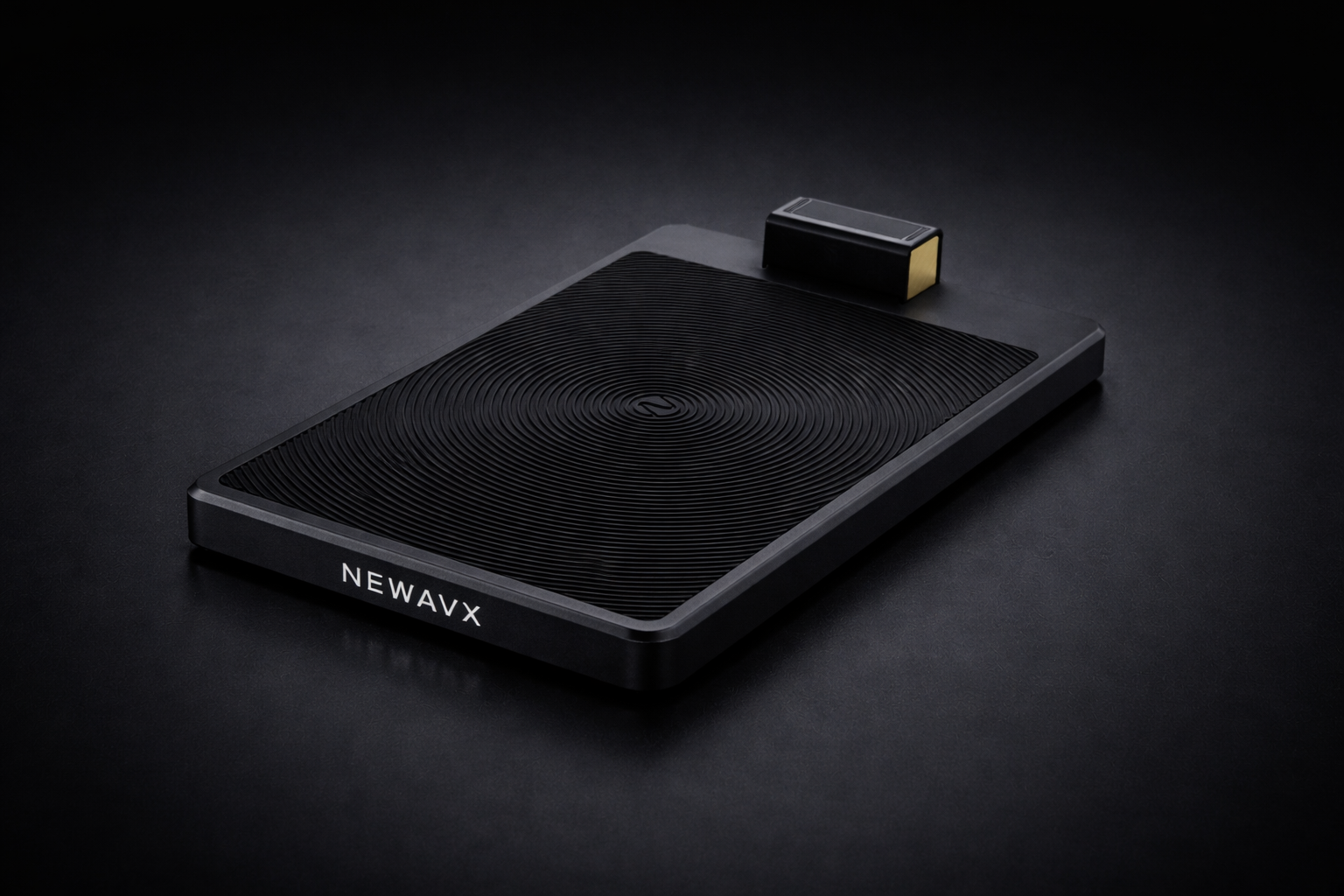
NEWAVX has developed a proprietary, first-in-class mechanical stimulus designed to deliver key biological effects typically associated with exercise, without requiring physical exertion.
Rather than replacing exercise, the technology is intended to bridge the gap between exercise and medicine, supporting individuals who are unable to tolerate conventional movement-based rehabilitation.
The approach is non-drug, adaptable to different environments, and designed with future clinical, regulatory and scalability requirements in mind.
Early real-world use demonstrates strong acceptance, comfort and repeat engagement, providing a robust foundation for structured scientific and clinical development.
WMHTIA support & impact
As a WMHTIA grant recipient, NEWAVX undertook a multidisciplinary development programme led by the University of Birmingham, with applied mathematics and modelling playing a central role in integrating physiology, computation and device design.
The collaboration brought together expertise across:
- Applied mathematics and modelling
- Human physiology
- Computer science, including medical imaging and data-driven analysis
- Custom medical devices, including additive manufacturing techniques
Wider WMHTIA support enabled NEWAVX to translate real-world experience into structured engineering, modelling and early system development, strengthening the scientific and technical foundations of the platform while aligning future development with clinical, regulatory and commercial pathways.
This included drawing on the support of WMHTIA partners:
- Precision Health Technologies Accelerator (PHTA): Clinical guidance, access to specialist networks, and infrastructure support
- Manufacturing Technology Centre (MTC): Early engineering development and delivery of a working proof-of-principle rig
- Birmingham City University: Development of NEWAVX’s first AI prototype
- Element Materials Technology: Early regulatory pathway guidance
- Forresters and Shoosmiths: Legal, intellectual property (IP) and commercial strategy support
WMHTIA-supported development marked a critical step in NEWAVX’s transition from hands-on delivery to a scalable biotech and deep tech platform.
Key outcomes include:
- Strengthened academic collaboration anchored at the University of Birmingham
- Early physical and digital prototypes
- Increased clarity on regulatory and translational direction
- Improved readiness for future clinical and commercial scale
The work is also supporting the preparation of a peer-reviewed academic publication, integrating physiological, metabolic and imaging data to further strengthen the evidence base underpinning the platform.
Together, these outputs reinforce NEWAVX’s positioning as neither exercise nor medicine, but a new therapeutic category between the two.
Alongside its academic programmes, NEWAVX maintains an independent humanitarian mission, applying its technology in settings where conventional rehabilitation and medical infrastructure are limited or unavailable.
The platform has been used in austere and conflict-affected environments to support early physical and psychological recovery in individuals unable to exercise or access standard rehabilitation.
This work is conducted independently of the University of Birmingham collaboration and the WMHTIA programme, and has informed the platform’s emphasis on portability, usability and real-world resilience.
What's next?
Building on WMHTIA-supported development, NEWAVX is now progressing toward further scientific and clinical validation as well as regulatory pathway advancement.
NEWAVX is also expanding its collaboration with healthcare and industry partners, and establishing scalable manufacturing and deployment plans.
Francesca Fox, Co-Founder & CEO of NEWAVX, said:
"Innovation rarely moves in straight lines. The WMHTIA forced us back to first principles and challenged a technology that was new, unfamiliar, and often misunderstood. We entered as a veterinary wellness product and emerged as NEWAVX – a company built for human impact. Thanks to this programme, our technology moved forward faster and with far greater clarity.”
For more information on the work that NEWAVX is doing, visit www.newavx.com
The WMHTIA is part of the pilot Innovation Accelerator programme, which is led by Innovate UK on behalf of UK Research and Innovation and the Department for Science, Innovation and Technology.
This new model of funding focuses on locally-led innovation to drive economic growth and technological advancement by supporting regional innovative businesses, researchers and entrepreneurs. In the West Midlands, local leadership has been driven by a partnership comprising of the West Midlands Combined Authority, universities and other research institutions, and senior industry representatives.
Building on the £100 million already invested between 2022 and 2025, a further £30m was spread equally across three UK city-regions participating in the pilot Innovation Accelerator programme, which includes a funding boost of £4m for the WMHTIA to continue its support of Health Tech innovators in 2025/26.

Sources: